Monday, January 31, 2011

Staging Uses Many Skills


One of the best pieces of advice I’ve ever received has to do with career changes. Simply stated, it is, if you change fields, bring all the skills you’ve learned with you. 

What are your skills? What do you love doing? What have you studied? Staging your home will be more successful if you bring all your assorted fields of know-how to the front.

For example, 

  • An accountant’s training will help with tracking expenses and projecting costs. 
  • Someone with exceptional people skills might set up barters for services, or negotiate prices with suppliers. 
  • If you have computer skills you’ll be able to use the Internet for locating bargains as well as information. 
  • If you’d rather read than do anything else, study the local real estate market to make better staging decisions.
  • A collector can use her trained eye to select the best decor items to display. 
  • If you are accustomed to managing a staff, you’ll be good at setting goals, delegating and scheduling. 
  • Even a passionate shopper can put her skills to use finding deals.
What skills help you stage your home?

Thursday, January 27, 2011

How to Use Shabby Chic Art


Art in your staged home should emphasize the best qualities your home has.

Do you feel that your home is charming and cozy, old fashioned and maybe a little bit country? If so,  shabby chic art can be your go-to art style.  

While too much shabby chic style decor can make a staged home look too girly, too crowded, or too tattered, a little goes a long way.

There's nothing like an old, framed oil painting of roses or a painted tray to make a room feel homey.

It won't work in all settings, but here are some tips for using these pretty paintings.

Bathrooms and bedrooms especially lend themselves to these pretty pastel renderings. Small ones can be tucked into a corner of the bath, and larger ones can hang over a dresser or bed.

On the other hand, contemporary rooms look more pulled together if the art is modern. Posters, photographs and abstract paintings are going to work better than what I am calling shabby chic art. So, if you're going for a more polished, modern, uptown look, skip the vintage florals in chippy frames.

There's nothing wrong with clustering a group of small floral paintings on one wall. In fact, it's preferable to scattering them around the room.

Shabby or cottage style art doesn't always have to be paintings. Boxes, tabletops, trays and lamps that pick up the vintage look have the same charming effect on a room.

A lamp like this one from Lamps Plus is 
ornate enough to carry a room that's too simple. 

You don't have to spend big bucks. 
Almost any lamp base can get a 
rose decoupage or decals to convert it 
to something similar in mood.

The pastel colors  -- like the ones in 
the photo of the tray from Such Pretty Things  -- 
that make 
shabby chic so appealing are 
the same colors that make home staging 
work well.  They are
 non-offensive and familiar.\


There's nothing wrong with mixing new with vintage. One of the principles of shabby chic is combining elements that don't usually appear together, like fine crystal and wrinkled linens.

Art doesn't have to be graphic art. A mirror can qualify as wall art, especially if it reflects aspects of your room you want to make sure buyers notice.

Mirrors with elaborately carved frames are easier to find second hand than art with frames that lend themselves to a distressed finish. Here, the contemporary lamp fits in perfectly. Photo: HGTV.com

You can find shabby chic and cottage style artwork suitable for staging at flea markets, garage sales, thrift stores and eBay. I've found that a search of "vintage rose paintings" gets you better results than "shabby chic art," on eBay.

I wrote about the good and not-so-good points of decorating shabby chic style if you are selling a home in this post.


Top photo: Country Living

Monday, January 24, 2011

Seen Any Photos of Scantily Dressed Rooms?

Staging is going to make your home show better online, where the first battle for buyers’ attention is being waged. Look at the two photos above and tell me which piques your interest and gives more information about the property. Photo: virtualstagingsolutions.com.


There are different schools of thought about how much furniture a staged room ought to have. 

Some stagers suggest that by setting a bed, just a bed, in a room, buyers will know that the room is a bedroom. They say a single piece of furniture is enough.

I couldn't disagree more. Staging does more than let the buyer know the room’s primary function.

This kind of scant staging, as economical as it is, won’t:
  • Capture the imagination of the buyer. 
  • Make the home memorable (except in a self-defeating way). 
  • Provide information like scale and possible secondary uses for the spaces. 
  • Emphasize the property’s assets. 
  • Attract as many househunters. 
  • Create confidence in the unseen infrastructure and general maintenance of the house which will justify its asking price. 
  • Compare well to similar properties that are staged. 
  • Set the scene for beautiful photographs which are so important in today’s Web-focused real estate market.
Statistics show that 90 percent of all real estate searches now begin online. Most people who are interested in purchasing a home do their own research on the web before they visit a realtor. What they see online -- in addition to the specifics like number of bedrooms and bathrooms, square footage, and school district -- is photos.

Are you dressing your rooms scantily or furnishing them to be photogenic? 

Thursday, January 20, 2011

Decor Trends Favor DIY Home Stagers

I read the news and I like it. 

Trends in interior decoration are welcome news for DIY home stagers.

The trend-spotters are saying that Americans expect to spend more time at home because of the financial crunch.

If they're looking for a home to buy, they are more likely than in past years to be looking for homey homes, homes that aren't just showplaces, but have some old fashioned elements mixed in with some touches of trendiness.


You'll see more white in the coming year. Get out your paint brush and freshen up your home. Staging still calls for some color on the walls to boost the charm factor. Photo: Country Living.


More white!  But a smattering of greens keeps the look fresh and interesting. Older furniture, and even the light fixture, were painted white -- a good choice for DIY stagers. Photo: House Beautiful.
 

Repurposing is fashionable. A bench becomes a table, and it's on trend. A sweater can become a pillow cover, and greeting cards can become framed art. Photo: Jeff McNamara in Real Simple.


Another roomful of white, dressed with leggy chairs and wood dining or working table. Buyers love light (who doesn't?), and white bounces light all around. The flowers, branches and bird posters accessorize the room with nature, like gentle reminders of the nearby outdoors. 
Photo: Annie Schlecter via Cococozy.com.
 
There's plenty to love about predictions for how interior decoration is headed in 2011.

There's also plenty to love about the ideas in my homestaging eBook, DIY Home Staging Tips to Sell Your Home Fast and for Top Dollar. You can donwload it immediately and start sprucing up your home on the market now!

Top photo: Meredith Corp.

Monday, January 17, 2011

Cats Don't Have to Stink

 The famous Skippy. She is a lady and she never leaves an unpleasant aroma in her wake.

I'm spending a few days babysitting my two young grandsons where they live. We're "home alone," while my daughter and her husband take a well deserved vacation. I'm also sitting for Skippy and and Jenga, their two tiger cats.

Cats in the Staged Home

Since I have never owned a cat, having to feed and clean up after one is new to me. Kids, yes. Kitties, no. What else is new to me is that a cat box doesn't have to smell up the whole room.

Have kitty litter formulas changed over the past few years, or have I visited only cat owners who never scooped poop?


I have the kind of nose that, if I walk my dog on a summer evening, I can tell you what each neighbor is cooking for dinner, and what is blooming in their yard. And I will be triple bagging what I have to pick up after Misty. I have a sensitive nose, and if I can't detect any nasty cat bathroom scents, no one can.


Animal Smells Are a Turn-off

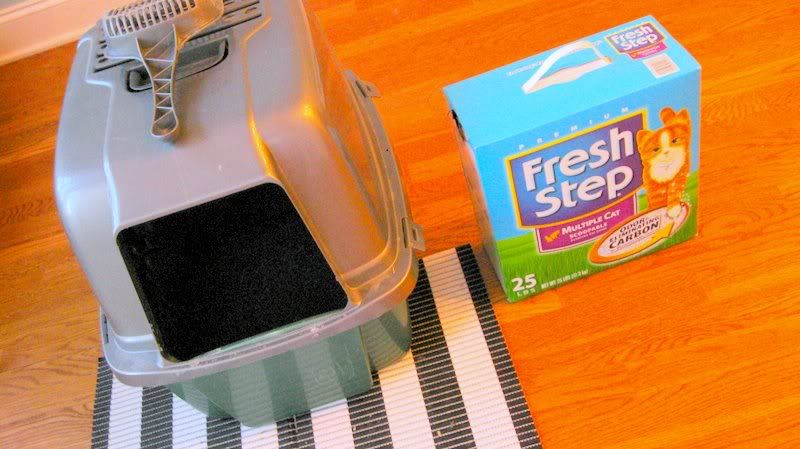
Home sellers with pets, there is NO reason for any unpleasant animal aromas in your home. None. The product that Skippy and Jenga use is Fresh Step brand, Premium Multiple Cat Scoopable. It contains carbon for odor absorption. It's lightly scented. It makes easy work of what could be a stinky chore.      

This post is short because I'm scheduled for a reading of Goodnight, Moon. 

Jenga likes a bedtime story, too.

Thursday, January 13, 2011

Do You Have a Pre-Showing Checklist?

The cleaner your home is, the more buyers will love it.
 But you have to live there, too!

Your Realtor calls to ask if she can bring someone over, like now.

You don't dare say no.

Are you ready?

Having a checklist on your phone, or else printed (but not left out for home buyers to see!) will come to your rescue at times like this.

Keeping clutter under control and creating the illusion of a spic and span home are two of the best ways to win a buyer.

This list was originally created by my friend Laurie who had a house on the market. She has four children.

You can label her compulsive if you like, but I love the way she balances her preference for cleanliness with sane living.

She knew it was important to keep her house show-me ready until it sold. 

And sell it did! Here's Laurie's list:

Baths

Cover any laundry in hampers.
Put toiletries away in vanities.
Check shower and tub for toys, stray hairs, and facecloths.
Wipe counters, sinks and faucets with microfiber cloth.
Bring out the good towels.
Pour some scented cleaner in toilets and put lids down.
Collect prescription medicines and throw in go-bag to take to car.

Kitchen

Relocate anything in sink to dishwasher. Quickly once-over sink, faucet, counter, and stovetop with microfiber cloth.
Empty kitchen garbage, and take outside.
Swiffer the floor.

Bedrooms

Stash small rugs under beds.
Put magazines, etc, under bed.
Fluff pillows, pull bedspreads tight.
Close closet doors.

Living Room, Family Room, Dining Room 

Swiffer floors, check carpet for bits of debris.
Plump pillows and seat cushions.
Hide newspapers and remote under seat cushions.
Gather all toys and toss into chest and baskets.

Whole House

Walk through house and throw any stray, embarrassing, personal or small items into designated clean laundry basket. Put laundry basket in car.
Double check desk top, refrigerator front and all tables to be sure all personal stuff like credit cards, mail, calendars and valuables are securely out of sight. When in doubt, stuff into go-bag.  
Turn on ceiling fans and lights.
Open all blinds, drapes and curtains. 

Outside

Sweep steps.
Check for cobwebs near entrance. Hit them with broom.
Move bikes, toys garden house, etc. to side of house.

Use Laurie's list. When you get a short notice call, ask the broker to stall for 30 minutes, so you can run down your list. A checklist helps you focus, gives you peace of mind, and simplifies your tasks when you have to pickup on the fly. Find other ways to be prepared for home buyers in my $5 eBook, DIY Home Staging Tips to Sell Your Home Fast and for Top Dollar.    

Monday, January 10, 2011

What Staging Can't Fix

Know what's fixable, and what isn't. Popcorn ceiling texture is removable, but it's a big hassle
                                                           Photo: Never Paint Again

Just like you can't fix stupid, there are some things that home staging just can't fix.
Simple staging can't fix things like:
  • Popcorn texture on ceilings. 
  • Windows that are not energy-efficient.
  • Walls in terrible condition.
  • Traffic pattern on carpeting.
  • Ceilings lower than 8 1/2 feet.
  • Lack of windows or small windows.
  • Unattractive view through window or doorway.
  • Awkward room dimensions or shape.
  • Awkward exit or entrance.
  • Small room.
  • Cavernous room.
  • Limited closet or storage space.
  • Mismatched doors or trim.
  • Mismatched flooring.
  • Obsolete appliances.
  • Obsolete bath fixtures.
  • Poor quality kitchen cabinets.
    Unless your staging goes heavy-duty, these shortcomings won't go away. What smart staging can do is minimize the impact these liabilities have on buyers. It's all about keeping the focus on a home's assets. Some of these problems can be passed off as charming quirks. Some may not be problems to certain buyers.  Some would disappear if you just threw money at them. 

    The way I see it, there are three levels of home improvement. They are, in the order of the most expensive to the least expensive: 
    • Remodeling
    • Repairing
    • Redecorating or staging
    Of course, the boundaries between these three are fuzzy.

    Any buyer financing the purchase of your home will be required to hire a home inspection company to examine the property. Any serious problems, such as structural ones, will be noted on that report to the financing company and the buyer. You and your home have no secrets.

    To camouflage or disguise your home’s flaws would be a mistake. The house is what it is, and any attempt to hide problems would be foolish. Your staging shouldn’t be deceptive. Do not hide flaws or mislead buyers. Honesty will breed trust. It's better to offer an allowance for repairs you can't fix, but only if the buyer insists.   

    If you have a windowless room, don’t create a mock window by hanging a curtain or shade on a blank wall. If you have a non-functioning appliance, don’t pretend that it works. If you have a dripping faucet, don’t just turn off the water to that sink. Fix what you can fix. 

    There may be mirrors called into service for home staging, but not smoke!

    Examine the staging you’ve done in your home and evaluate it the way a prospective buyer would, then eliminate anything that a buyer would consider unethical. I offer plenty of tips for dealing with problems like old kitchen cabinets, old bath fixtures, ugly views, small rooms and mismatches, in my eBook, DIY Home Staging Tips to Sell Your Home Fast and for Top Dollar.  

    Thursday, January 6, 2011

    Details that Make the Difference

    Little things mean a lot. Smart home stagers know
    the importance of details inside and out. 
     
    What do snowflakes on mittens and brown paper packages tied up with string have in common? 

    Besides being some of Julie Andrews favorite things?

    They are details!

    Staging your home for sale? Then, details are your friends, because when you make them part of your decor, they will work their magic on buyers. Specifically, here's what details do:

    Create that high-end look. 

    Some details are small. But little things make a big difference.

    There is a whole category of decorator touches or dressmaker details, most of them items like tassels and tie backs on draperies, piping or fringe on a pillow, fancy or plain trim on a lamp shade, or nailheads on upholstered furniture.

    These touches create the layered look that gives distinction to a room.

    They make the room interesting without being arresting.

    Details by definition are subtle, like sparkle of real diamond earrings, the scent of bourbon vanilla, or the crackle finish of old leather.

    You can't talk about tassels without talking
    about The Nester and her Ultimate Tassel Guide

    You can learn how to create your own amazing
    and fun tassels that add 
    designer style to any room. 


    Surprise your potential buyer. 

    Other elements are considered details because they aren't obvious. Like a clean and organized area under the kitchen sink, or a lovely little bistro table and chairs in a hidden corner of the back yard.

    These examples are details because not everyone would have thought to put seating there, or made an area hidden by cabinet doors pretty.

    Donald Trump -- love him or hate him -- is known for his attention to detail. Imitate The Donald, because you can't argue with success. In a Trump hotel, the staff is well-trained and polite, the lobby is scented to sweep you away, and the decor -- from chandeliers to flowers to carpets -- is oversized to impress.  Nothing is left to chance or done half-heartedly.

    There's a lesson there for home stagers. It doesn't have to do with chandeliers and fountains. It has to do with exceeding expectations. How can you surprise -- in the best way -- people who come touring your home?

    Photo: Room to Inspire

    Details will make the difference between an ordinary home and a memorable one. You want your house falling into the second category. Anytime home staging feels like too much trouble, remind yourself that it's the details that will set your home apart from the comparables.

    Imagine the positive reaction.

     A house hunter will be impressed favorably when  she discovers this reassuringly tidy pantry on a home tour. It's artfully composed of many small details, that together make up something greater than the sum of its parts -- a closet she'll love.

    I once staged a farmhouse pantry in a similar fashion, lining the shelves with home preserves and pickled this and that. I know exactly the reaction the buyer had when she spied it: "When I live here, I can put up my own jams and jellies!"

    I discuss in my eBook, DIY Staging Tips to Sell Your Home Fast and for Top Dollar, how crucial it is in a staged home to avoid tiny stuff. Tiny stuff distracts, looks disjointed, and can be stolen. The trick to using details in a staged home is to make them part of something large.

    Here's examples:
    • Finials on top of lamps
    • Bobeches on candlesticks
    • Cabinet knobs and furniture pulls
    • Drapery rods and rings
    • Crown moulding and chair rails
    • Napkin rings on oversized cloth napkins
    • Ribbon on a front door wreath
    • Slight distressing on a vintage piece of furniture
    • Soaps piled in an apothecary jar
    • Sphagnum moss covering the soil in potted plants
    • Matting around a framed print

    The Wrap: 

    Once your home is decluttered and depersonalized, it may slide into that no-man's Land of Bland. Look over your rooms with a critical eye and ask yourself if there are enough details to capture the imagination and love of a potential buyer.

    Whether you believe that God is in the details, or the devil's in the details, it boils down to the same thing. They're powerful, so give them the attention they deserve.


    Monday, January 3, 2011

    How January Is Good To Home Stagers

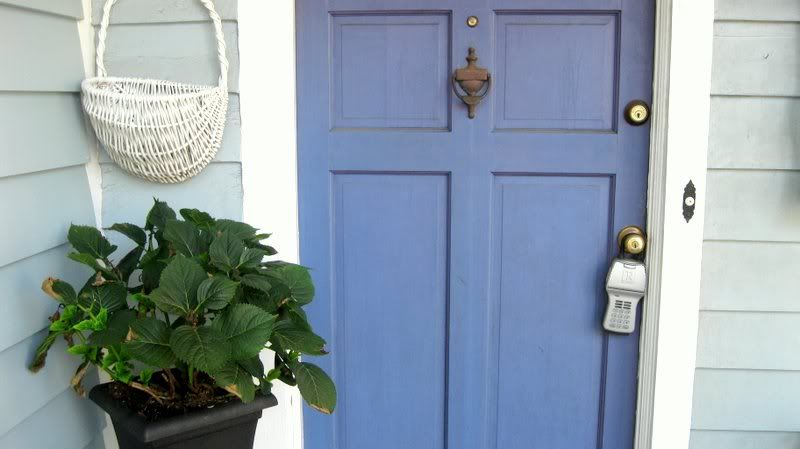
    My father-in-law had a tradition of opening wide the front door on New Year's Eve to welcome the new year. Are you ready for the adventure ahead in 2011? And, don't you just adore this blue door?

    This could be the start of something big.

    This could be the start of the year you sell your house and make more money than you thought you could.

    Because you staged it! Starting now.

    Now, January, is the time of starts. People are beginning new regimens, new habits, new plans to achieve new goals. 

    Many people have postponed plans to move until after the holidays. Now, the search begins in earnest. Springtime is peak time for relocating. Families want to settle in before school starts in the fall, and no one wants to move in the heat of summer, or in the fickle weather of winter.

    As a house seller, are you gearing up for the spring house-hunting season? Here are three steps worth taking.

    1. Do Your Homework. It's never too early to begin researching the market. What are houses similar to yours selling for? Listing for? Looking like? What's your least acceptable offer? Do you know a realtor? A home inspector? Do you have a budget for staging and moving? A timeline? 

    2. Plan Your Staging. Educate yourself about what styles will work for your home and what your typical buyer expects. Investigate off-site storage facilities or other options for storing excess furniture and belongings. Begin listing what furnishings would help to stage your property to maximize the home's potential. Download my eBook, DIY Home Staging Tips to Sell Your Home Fast and for Top Dollar, to learn everything you need to know. 

    3. Look for Deals. Shop thrift stores and estate sales to find steals on accessories. At the beginning of the year, many people go on organizing binges, discarding what doesn't work for them but might be perfect for staging your home.  At the same time, you can begin decluttering your own home of whatever doesn't do your home justice.

    Use January to kick-start your campaign to get your home sold. Listen to Bobby Darin. This could be the start of something grand.