Monday, November 28, 2011

Want Some Holiday Scents? Make a Citrus Pomander

You won't believe how easy it is to make a fragrant pomander!
Citrus tops the list of fragrances sure to please everyone. So why not greet visitors to your home on the market with the scent of fresh lemons, limes and oranges?

For the holidays, I like to mix citrus scents with the spicy aroma of cloves by making pomanders. They're pretty, they're easy to make, and the smell is natural so it won't offend anyone, even the chemically sensitive.

These pomanders are exactly like the ones people used to put in closets and dressers to make things smell pretty in the time before Fabreeze or Lysol.

Originally, pomanders were made and worn to ward off evil spirits and diseases, not to mention body odor in pre-deodorant days. Both men and women wore gold and silver containers as jewelry that held fragrant, stink-masking spices. As much as I love knights of bold in days of old, I'm glad I didn't live in those times. 

Now that your home is for sale, I am sure you have cleaned and decluttered, and made it smell fresh. To add a pleasant layer of fragrance, hang a pomander from a ribbon in a closet, set one on a kitchen window sill, leave one on a bedroom nightstand, or just pile some on a plate in the foyer.

Oranges, tangerines, lemons, limes and clementines all make great pomanders.
Once you see how festive and fragrant these citrus pomanders are, you may want to add them to wreaths, cluster them into centerpieces, or attach them on gift-wrapped packages.

Remember high school geography stories about European explorers sailing east to discover trade routes to parts of the world where spices grew? They needed exotic ingredients like cloves and cinnamon and pepper to preserve their meats, fruits and vegetables. Your inserted cloves will act as a preservative for your homemade pomanders. Unless you live in a very humid environment, the citrus rind will turn dark and leathery, and the fruit will be naturally preserved.

If your fruits develop any signs of mold as they are drying, move them to a warmer, drier location with good air circulation.  
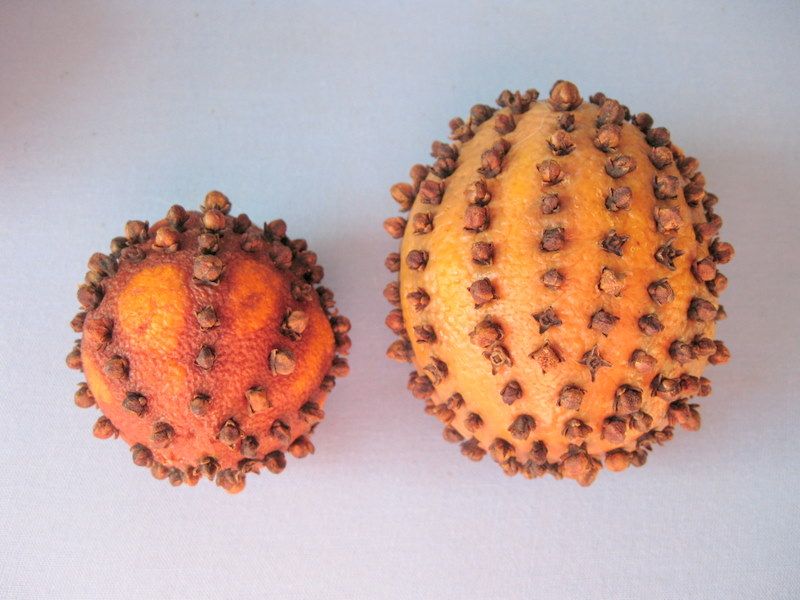
These fruits are a week old, and show signs of drying. Eventually, the color will even out.
My version of citrus pomanders is simple. If you like being more elaborate or more precise, it's your call. You can completely cover the fruit, or make intricate designs, or write a person's name or a word like "Noel," or roll the fruit in spices like cinnamon when you're done.

Rather than buy whole cloves in cute little bottles at your supermarket, buy them in bulk for much less money at an ethnic grocer or a natural foods store.
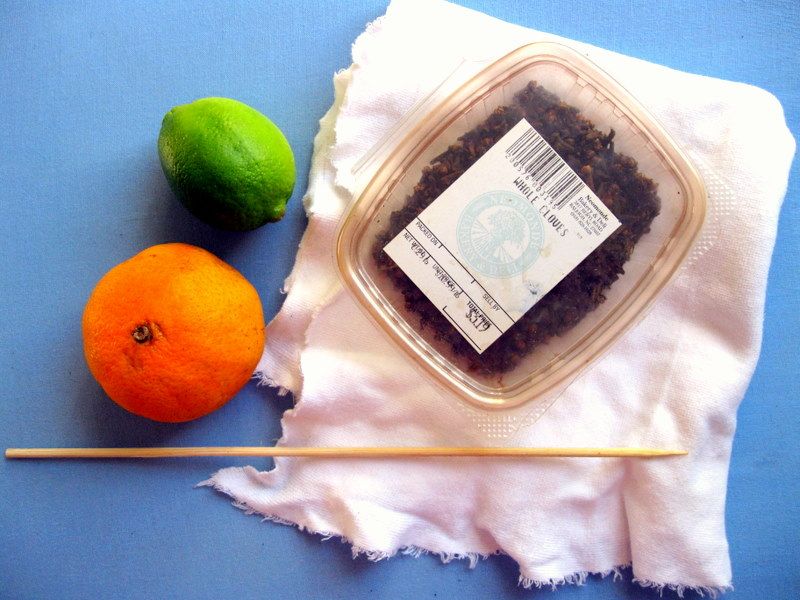
 
The supplies for this DIY project are ordinary and cheap.

What You Need
Fresh citrus fruit like lemons, tangerines, limes, kumquats, or oranges
Whole cloves
Skewer, ice pick, or fork
Small towel or rag

How to Do
Set yourself up by laying the towel or rag on your work area to provide an absorbent surface. Decide on your pattern, and begin by inserting the skewer, ice pick or fork to make holes. The fork will give you evenly spaced holes, but they will be in a straight line.
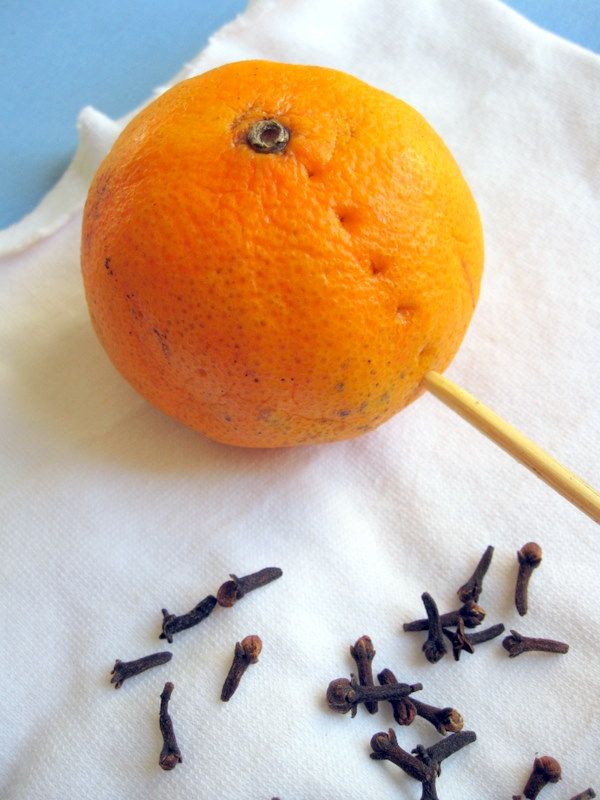
Make good sized holes, so that you don't have to push hard on the cloves. 

After punching in ten or so holes, insert a clove in each. You can be as choosy as you want, using only those with seeds in the head, or ones without, or both. I use both. If you want to get fussy, you can sort by size, and use all large or all small cloves, or create a graduated design. Arrange them close together, or further apart. You're the artist!
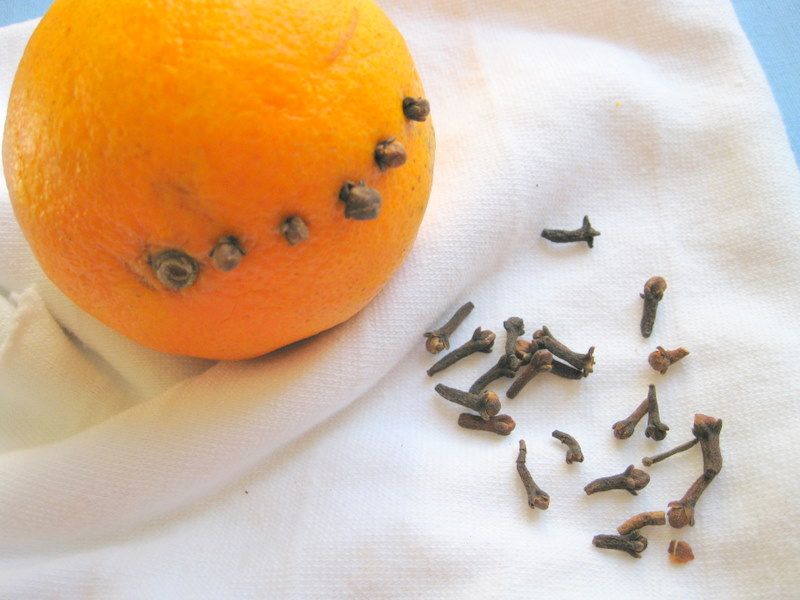
You will find some cloves that are small or broken. Discard those, and use the best. 

In a few days your citrus rind will begin to darken slightly, but your pomander will still smell delightful and look attractive. Some people save their pomanders from year to year, because the fragrance never entirely dissipates. 

When your house is for sale, and it's holiday time, keeping seasonal decorations to a minimum makes good sense. Scented pomanders are one decoration that is simple and effective, yet inexpensive.
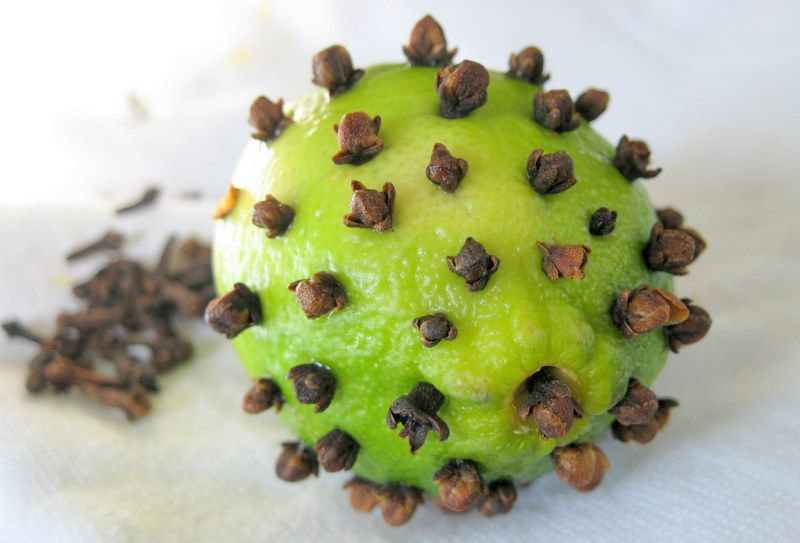
Who doesn't love the fresh scent of lime? And the color is perfect for Christmastime.
Discover more tips to help sell your home in my ebook, DIY Home Staging Tips to Sell Your Home Fast and For Top Dollar.
Everything Under the Moon

Sunday, November 27, 2011

New 3D Home Design


Monday, November 21, 2011

Yes, You Can Learn to Stage Your Home from a Magazine

If you are thinking the rooms in your home can look better to home buyers, but you aren't sure how to do it yourself, there's a fast and fun way to bring your know-how up to speed.

Besides reading my ebook!

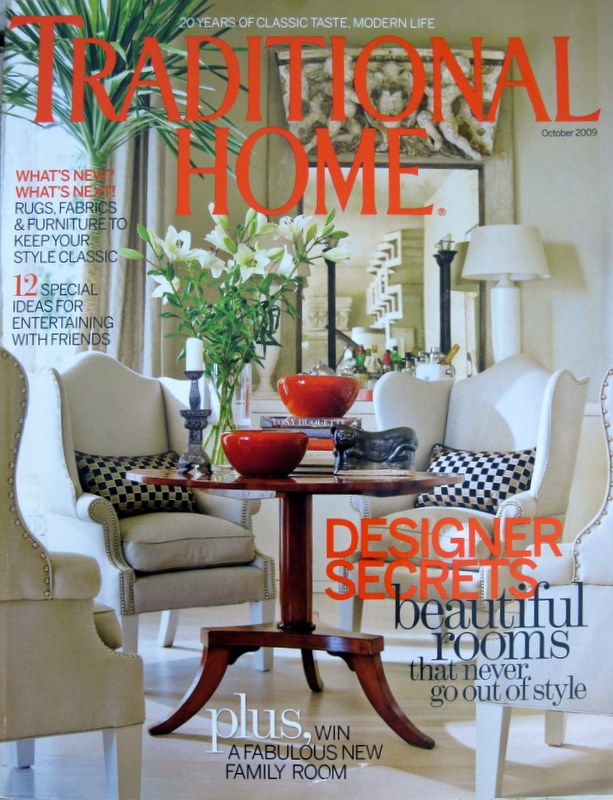
My suggestion is to peruse the pages of Traditional Home Magazine, where the tagline is "Classic Taste,  Modern Life."

Isn't that the same message you want your home to whisper in the ear of buyers?

Are you stuck on how to arrange furniture? Do you stare at your rooms and ponder what tweaks will make them more inviting, more comfortable, more coordinated, more fashionable, more luxurious? Do you wonder what's the best use of bookcases and shelving? Are you looking for an idea for a floral arrangement? Confused about color schemes? Flooring choices? Curtain styles?

I know what you are thinking. "My house doesn't resemble the homes in home decor  magazines, not by a long shot." It doesn't matter. Even if your home is a modest cottage, or an ordinary 1980's ranch house, or an ultra modern condo, or a sparse country lodge, a mobile home, or an old-fashioned farmhouse in the middle of nowhere. The home decor pictured in Traditional Home demonstrates basic principles of good design and interior decoration.

There are lessons to be learned here if you know what to look for.

The first lesson is to wear your staging spectacles. Ask yourself, "What in these photographs makes the rooms look bigger, fresher, friendlier?"  Examples will be color schemes, tabletop and mantel accessories, window treatments, furniture choices, and furniture arrangements.  

The second lesson is to think like a buyer. "What in this photo would be a deal breaker if I were ready to make an offer?" Some examples would be dark wall color, built-in fixtures with too much personality (like an orange Formica countertop, outdated appliances, wallpaper, or landscaping that is very high maintenance).

Traditional Home is just another "shelter" magazine (the best in my opinion). It's not a manual about home staging, but it can still get your eye accustomed to what really good design and decor look like. 

Learn by Example and Copy The Best

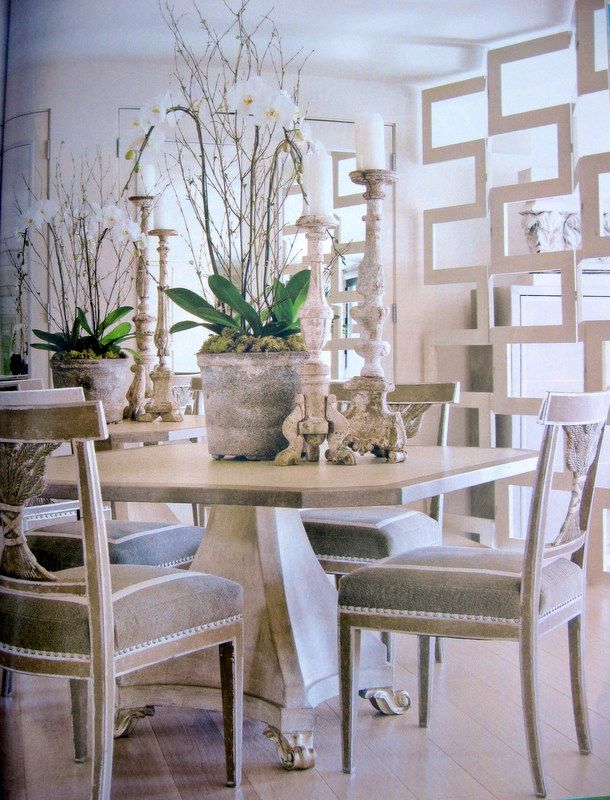
Let's look at this one photo to see what we can glean from it.

It's from the October 2009 issue of Traditional Home, and it's the dining room in the home of my absolute favorite designer, Henry Brown.

Here are the elements that I think make this room so drop-dead gorgeous, and suitable for a staged home.

These are all elements easy to imitate.  
  • The colors are soothing. The color scheme is monochromatic, a selection of warm greys and whites.
  • Nothing is tiny or distracting. All the accessories are fabulously over-sized.
  • There are "signs of life" (plants). Henry Brown owns a home and garden store and greenhouse, so his plants are always real, but yours can be silks.
  • A big mirror enlarges the space. There's only one table, one potted plant here. Even if you don't have and can't afford a huge mirror, small mirrors bounce light and confuse the eye about boundaries. 
  • Natural light fills the space. If sunlight doesn't flood your dining area, artificial lighting can make up for it. 
There's Nothing Wrong with Stealing Ideas
Here are more ideas you can bootleg (a word I prefer over "hack").
  • A set of four simple wooden chairs can be painted and upholstered to look comfy and glamorous. 
  • Candlesticks and other accessories don't have to match. Table doesn't have to match chairs.
  • A room divider can let light enter the room, and be made from simple strips of lumber. 
  • Some items look pristine, and other items look weathered and aged. If everything you have is out-of-the-box new, add some props with patina. And if your rooms look too shabby, add items that show off their new-ness. It's a balance.
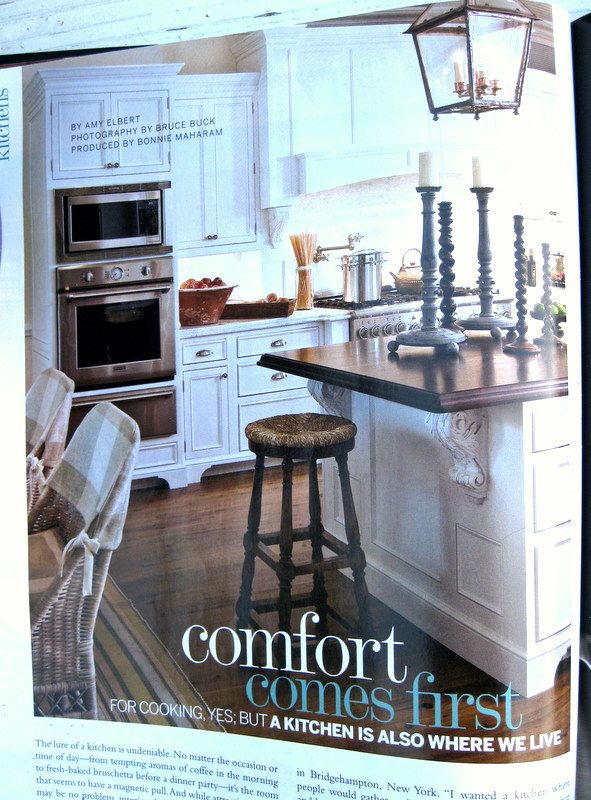
In this photo of a kitchen from the same issue, we can learn some staging tricks that will work in almost any home.

  • Corbels, feet, and crown moulding added to cabinets can put a custom spin on builder grade cabinets.
  • Dark wood floors and white kitchen cabinetry will never go out of style. 
  • Wicker chairs can be dressed up with small slipcovers to introduce some pattern into the space.
  • A giant bowl of apples and a package of spaghetti make interesting and inexpensive kitchen staging props.
  • A wooden top on a center island turns it into an eating area.
Try it yourself, and see what fresh ideas you walk away with when you spend some relaxing time lost in the pages of Traditional Home. They don't pay me to say this. I have issues dating back to 2000. Does that tell you my drug of choice?

And while you're thinking of how to make yourself a better homestager, check out my ebookhttp://diyhomestagingtips.blogspot.com/p/ebooks.html, DIY Home Staging Tips to Sell Your Home Fast and For Top Dollar, and see what's in store for you for the price of one issue of Traditional Home.   


Monday, November 14, 2011

5 Marla Front Elevation & Plan 2

Share